Assam and Northeast play key role in India’s ‘Act East’ vision: Jaishankar


| 2025-02-26
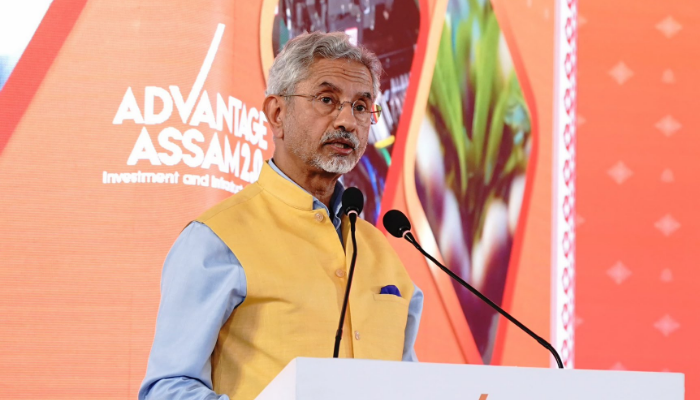
EAM Dr S Jaishankar delivering speech at Advantage Assam 2.0 in Guwahati on February 25
While working together, India and Southeast Asia can support each other’s journey toward greater progress, EAM Dr S Jaishankar said.
In his speech at the Advantage Assam 2.0 Summit, External Affairs Minister Dr S Jaishankar said as India recovers and rejuvenates, it is only logical to place a greater focus on the East.
“We are not only correcting past mistakes but laying the foundation to explore new opportunities. And that is exactly what Prime Minister Modi seeks to do through the ‘Purvodaya Scheme’ that brings new energy and resources to infrastructure, employment, skilling and development in these regions. It is only when the North East and the East realize their potential more fully that we can progress in our quest towards Viksit Bharat,” the EAM said.
He also underscored the significant progress made under India’s ‘Neighbourhood First’ policy since 2014, particularly with countries like Bangladesh, Bhutan, Nepal, and Myanmar.
“Whether it is Bangladesh, Bhutan, Nepal, or Myanmar, we have seen new roads, checkpoints, rail links, waterways, power grids, fuel pipelines and transit facilities,” Jaishankar said.
The EAM highlighted the significant progress made in India’s relations with the ASEAN countries over the past three decades.
He noted that the deepening of ties has resulted in mutual benefits across several domains, including trade, investment, tourism, and security. These relationships have consistently evolved, bringing tangible outcomes for both India and ASEAN nations.
Since the 2024 General Elections, India has hosted several high-level dignitaries, including the Presidents of Indonesia and Singapore, as well as the Prime Ministers of Malaysia and Vietnam. Prime Minister Modi himself has visited key ASEAN countries, such as Singapore, Brunei, and Laos, underscoring the growing importance of these partnerships.
Jaishankar emphasized the importance of not delaying the review of the ASEAN-India Trade in Goods Agreement (AITIGA), noting that updating and improving this agreement will be crucial for enhancing economic ties between India and ASEAN.
He also highlighted that smoother mobility arrangements between the regions could provide a significant economic boost, making it easier for people and goods to flow across borders.
He pointed to emerging areas like Artificial Intelligence (AI), semiconductors, green shipping, and green hydrogen as key opportunities for future collaboration, urging both sides to actively explore these sectors.
Jaishankar also expressed appreciation for the recent steps taken by Malaysia and Thailand to liberalize visa requirements for Indian citizens, while other ASEAN members have expanded air connectivity, further facilitating travel and trade.
The EAM said education and skills development represent vital areas for future cooperation, suggesting that collaboration in these domains could help strengthen the partnership and create long-term benefits for both India and ASEAN countries.
Jaishankar highlighted the India-Myanmar-Thailand Trilateral Highway (IMTT) as a potential “game changer” for regional connectivity and cooperation. He acknowledged the challenges posed by the internal strife in Myanmar, which has impacted progress on the highway, but emphasized the importance of not allowing these challenges to hinder such a significant initiative.
The EAM called for practical solutions to overcome the obstacles and ensure the advancement of the project, recognizing its critical role in fostering stronger ties within Southeast Asia.
He pointed out that Southeast Asia, with a population of nearly 700 million and a GDP of around $4.25 trillion, is a key partner for India. This region, which is slightly larger than India’s own economy, represents an enormous opportunity for mutual growth and prosperity.
The EAM stressed that while working together, India and Southeast Asia can support each other’s journey toward greater progress, underscoring the strategic importance of regional cooperation.
He also emphasized the strategic importance of the Bay of Bengal in India’s Act East policy.
“There has been a heightened attention given to the BIMSTEC grouping in this context. In a way BIMSTEC is where Act East meets Neighbourhood First. We finalized its Charter in 2022 and are currently preparing for the next Summit very soon. Our plan is to expand its activities, create more centers of excellence, strengthen youth networking, address health challenges, and increase capacity building. I should also add that membership of Mekong Ganga Cooperation (MGC) and partnering with the Indonesia-Malaysia-Thailand Growth Triangle (IMT-GT) add additional texture to our engagement,” Dr Jaishankar said.
Jaishankar outlined India’s broader ambitions in the Indo-Pacific region, particularly through strengthened ties with Japan and South Korea, both of which have become significant economic players in India. He noted that India’s objective is not only to deepen these relationships but also to modernize and make them more mutually beneficial, leveraging India's growing capabilities and talent.
Regarding Japan, he acknowledged the key role of the Act East Forum, which has prioritized development projects in India’s Northeast, with a focus on enhancing mobility and training. He expressed confidence that the Northeastern states, particularly Assam, will be key beneficiaries of these efforts.
On India’s eastward engagement, which now spans Australia, New Zealand, and the Pacific Islands, he highlighted the growing importance of Australia in this relationship, particularly with the Economic Cooperation and Trade Agreement (ECTA) and the increased political and security cooperation between the two countries.
Mobility has also become a notable feature of the Indo-Australian partnership, supported by both nations' membership in the Quad. Jaishankar also mentioned the upcoming visit of the European Union Commission to India, which will focus on discussions about the Indo-Pacific, a region connected to India’s Act East policy, linking the Indian Ocean with the Pacific.
While talking about Assam and the Northeast, Jaishankar highlighted the region's steady improvements in infrastructure, connectivity, and skills development over the last decade, making it more attractive for business and creating mutually advantageous opportunities.
He emphasized that Assam and the Northeast are positioned as a crucial hub, connecting India with Nepal, Bhutan, Bangladesh, ASEAN countries, and beyond.
“We are not only correcting past mistakes but laying the foundation to explore new opportunities. And that is exactly what Prime Minister Modi seeks to do through the ‘Purvodaya Scheme’ that brings new energy and resources to infrastructure, employment, skilling and development in these regions. It is only when the North East and the East realize their potential more fully that we can progress in our quest towards Viksit Bharat,” the EAM said.
He also underscored the significant progress made under India’s ‘Neighbourhood First’ policy since 2014, particularly with countries like Bangladesh, Bhutan, Nepal, and Myanmar.
“Whether it is Bangladesh, Bhutan, Nepal, or Myanmar, we have seen new roads, checkpoints, rail links, waterways, power grids, fuel pipelines and transit facilities,” Jaishankar said.
The EAM highlighted the significant progress made in India’s relations with the ASEAN countries over the past three decades.
He noted that the deepening of ties has resulted in mutual benefits across several domains, including trade, investment, tourism, and security. These relationships have consistently evolved, bringing tangible outcomes for both India and ASEAN nations.
Since the 2024 General Elections, India has hosted several high-level dignitaries, including the Presidents of Indonesia and Singapore, as well as the Prime Ministers of Malaysia and Vietnam. Prime Minister Modi himself has visited key ASEAN countries, such as Singapore, Brunei, and Laos, underscoring the growing importance of these partnerships.
Jaishankar emphasized the importance of not delaying the review of the ASEAN-India Trade in Goods Agreement (AITIGA), noting that updating and improving this agreement will be crucial for enhancing economic ties between India and ASEAN.
He also highlighted that smoother mobility arrangements between the regions could provide a significant economic boost, making it easier for people and goods to flow across borders.
He pointed to emerging areas like Artificial Intelligence (AI), semiconductors, green shipping, and green hydrogen as key opportunities for future collaboration, urging both sides to actively explore these sectors.
Jaishankar also expressed appreciation for the recent steps taken by Malaysia and Thailand to liberalize visa requirements for Indian citizens, while other ASEAN members have expanded air connectivity, further facilitating travel and trade.
The EAM said education and skills development represent vital areas for future cooperation, suggesting that collaboration in these domains could help strengthen the partnership and create long-term benefits for both India and ASEAN countries.
Jaishankar highlighted the India-Myanmar-Thailand Trilateral Highway (IMTT) as a potential “game changer” for regional connectivity and cooperation. He acknowledged the challenges posed by the internal strife in Myanmar, which has impacted progress on the highway, but emphasized the importance of not allowing these challenges to hinder such a significant initiative.
The EAM called for practical solutions to overcome the obstacles and ensure the advancement of the project, recognizing its critical role in fostering stronger ties within Southeast Asia.
He pointed out that Southeast Asia, with a population of nearly 700 million and a GDP of around $4.25 trillion, is a key partner for India. This region, which is slightly larger than India’s own economy, represents an enormous opportunity for mutual growth and prosperity.
The EAM stressed that while working together, India and Southeast Asia can support each other’s journey toward greater progress, underscoring the strategic importance of regional cooperation.
He also emphasized the strategic importance of the Bay of Bengal in India’s Act East policy.
“There has been a heightened attention given to the BIMSTEC grouping in this context. In a way BIMSTEC is where Act East meets Neighbourhood First. We finalized its Charter in 2022 and are currently preparing for the next Summit very soon. Our plan is to expand its activities, create more centers of excellence, strengthen youth networking, address health challenges, and increase capacity building. I should also add that membership of Mekong Ganga Cooperation (MGC) and partnering with the Indonesia-Malaysia-Thailand Growth Triangle (IMT-GT) add additional texture to our engagement,” Dr Jaishankar said.
Jaishankar outlined India’s broader ambitions in the Indo-Pacific region, particularly through strengthened ties with Japan and South Korea, both of which have become significant economic players in India. He noted that India’s objective is not only to deepen these relationships but also to modernize and make them more mutually beneficial, leveraging India's growing capabilities and talent.
Regarding Japan, he acknowledged the key role of the Act East Forum, which has prioritized development projects in India’s Northeast, with a focus on enhancing mobility and training. He expressed confidence that the Northeastern states, particularly Assam, will be key beneficiaries of these efforts.
On India’s eastward engagement, which now spans Australia, New Zealand, and the Pacific Islands, he highlighted the growing importance of Australia in this relationship, particularly with the Economic Cooperation and Trade Agreement (ECTA) and the increased political and security cooperation between the two countries.
Mobility has also become a notable feature of the Indo-Australian partnership, supported by both nations' membership in the Quad. Jaishankar also mentioned the upcoming visit of the European Union Commission to India, which will focus on discussions about the Indo-Pacific, a region connected to India’s Act East policy, linking the Indian Ocean with the Pacific.
While talking about Assam and the Northeast, Jaishankar highlighted the region's steady improvements in infrastructure, connectivity, and skills development over the last decade, making it more attractive for business and creating mutually advantageous opportunities.
He emphasized that Assam and the Northeast are positioned as a crucial hub, connecting India with Nepal, Bhutan, Bangladesh, ASEAN countries, and beyond.
This strategic location strengthens the region's potential for greater economic and geopolitical relevance as India continues to move forward in its Act East strategy, the EAM maintained.

India and Pakistan agree to immediate ceasefire across land, air and sea, US confirms mediation
India and Pakistan have agreed to a full ceasefire across all military fronts following US-mediated talks, halting three days of escalating conflict.
| 2025-05-10

India launches ‘Operation Brahma’ to aid Myanmar after devastating earthquake hits the Southeast Asian nation
Continuing its commitment as the first responder to crises in the countries of the Global South, India on Saturday launched ‘Operation Brahma’ to assist Myanmar, where a deadly earthquake has led to the death of more than 1600 people. The US Geological Survey estimates that the death toll could rise to 10,000.
| 2025-03-29

India-Nepal development partnership: India provides financial assistance for new school building in Nepal
Sharing a close relationship between them, rooted in strong cultural, ethnic, and historical ties, India and Nepal have over the years strengthened their longstanding partnership through various diplomatic initiatives, with development cooperation playing a key role.
| 2025-03-25

Jaishankar asserts Kashmir issue will only be resolved when Pakistan returns “stolen part” of the region to India
External Affairs Minister Dr S Jaishankar on Wednesday reminded Pakistan that India is waiting for Islamabad to “return the stolen part” of Jammu and Kashmir.
| 2025-03-06

India slams UN Human Rights Chief’s remarks on Kashmir and Manipur
India’s reaction came after UN High Commission for Human Rights Volker Turk referred to the situation in Manipur and Kashmir in his global update to the 58th session of the Human Rights Council in Geneva.
| 2025-03-04